


From Artisan Hands to Farewell Rituals: Joss Paper in the Flow of Tradition and Modernity
- bk group
- May 10, 2025
- 6 min read

Updated: May 12, 2025
A single sheet of joss paper - folded by hand, burned in ritual - carries the weight of memory, belief, and a culture navigating the pull between tradition and modernity.

During the full moon, the seventh lunar month, or Lunar New Year, flames flicker along Vietnamese streets as joss paper burns in clay urns or at the base of trees. Smoke weaves through the city’s rush, a quiet thread linking the spiritual world with daily life. Few pause to ask: Where did it come from?
The journey begins in Phúc Am, northern Vietnam's "joss paper capital," where cramped homes double as workshops. Here, artisans snip, glue, and paint, their work both craft and quiet devotion. Each paper robe or golden ingot reflects inherited knowledge passed down through generations.

From these village homes, boxes of joss paper travel to city markets and family altars, before their final transformation into ash - ritually released in farewell.
The documentary From Artisan Hands to Farewell Rituals traces this cycle, capturing the quiet resilience of tradition as it adapts, flickers, and persists in a rapidly changing world.
Joss Paper — A Belief Interwoven with Vietnamese Life
For generations, Vietnamese people have believed that the spiritual and physical worlds exist side by side. Joss paper acts as a bridge - a way to send love, respect, and symbolic "necessities" to the deceased. Though merely hand-cut sheets, each offering conveys the message: "We still remember you."

Once simple silver foil representing wealth, joss paper has transformed over time. Today, it includes paper mansions, smartphones, money-filled suitcases, even massage chairs - all crafted with care. Behind their humor lies a sincere wish: that loved ones are comfortable and not lost in the afterlife.
However, this growing richness has sparked debate. As sustainability becomes a modern concern, burning large amounts of paper - sometimes mixed with nylon or metal - raises environmental questions. Many younger people now ask: Can devotion to ancestors be expressed without contributing to pollution?
Some view joss paper as a vital cultural tradition, a mirror of national identity. Others argue it must evolve to align with contemporary values.
Still, in craft villages and city stalls, joss paper endures - each sheet a quiet symbol of faith, memory, and a society in transition, seeking a balance between reverence and relevance.
The People Behind the Paper: Phúc Am Village and the Birth of Joss Paper
In Phúc Am village, Thường Tín district, joss paper is more than a craft - it is a way of life. Known as the joss paper capital of northern Vietnam, the village’s quiet homes echo with the rhythm of tradition. The process unfolds in four steps - shaping, framing, gluing, and decorating - shared among family members in home workshops.

"You have to be skilled, or everything turns out crooked," said Mrs. Lê Tâm. Her hands, like many others', move with care and purpose. In another home, an elderly woman tenderly glued paper to a figure, her expression soft, as though preparing a loved one for a journey. Nearby, young women chatted as they worked - a quiet harmony between labor and life. "It’s not just for the dead. It calms our hearts too."
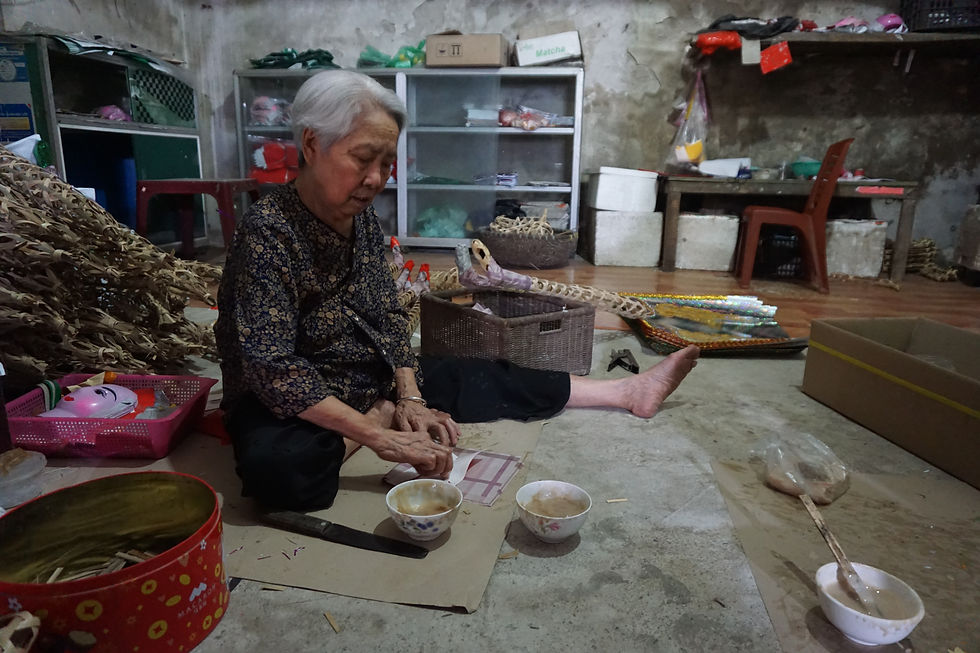
Every joss paper item, whether a horse or mansion, carries layers of time, effort, and love. In Phúc Am, not all make a living from joss paper, but all are part of its spirit.
At the village’s communal house, an elder reflected: "Joss paper is about loyalty. If people burn with sincerity, even paper has a soul." Modern forms may change, but the meaning - remembrance and peace - remains.
From Village to City - Joss Paper in the Market's Flow
Leaving the calm of Phúc Am, joss paper finds its way to the bustling streets of Hanoi. On festive streets like Hàng Mã, vibrant displays are expected - but instead, they are nearly absent. Shops brim with decorations and worship items, yet joss paper has faded into the background. “Few ask now, so we don't display much,” a clerk quietly explained.
Eventually, a modest corner shop is found, selling simple bundles of spirit money, paper clothes, and house models. "City folks burn less," the shopkeeper said. "They order online or use what temples provide. Still, come ancestor days or New Year, people return."
In the city, joss paper has shifted - from center stage to quiet persistence. No longer a market highlight, it now slips into drawers, plastic bags, and the occasional street corner smoke - still part of urban life, but softened.

A woman, who has sold joss paper for 38 years, shared: "I don’t really believe," she laughed, "but there's demand." Her shop overflowed with paper treadmills, iPhones, and even ATM cards. She once advised a man to buy a smaller horse for his father - "cheaper, warmer!" - but added, "If they believe, they’ll still choose the big one."
Her humor revealed a deeper truth: in the city, joss paper is not just about belief - it’s about livelihood, habit, and comfort in modern life's shifting landscape.
At the End: The Burning and What Ashes Cannot Consume
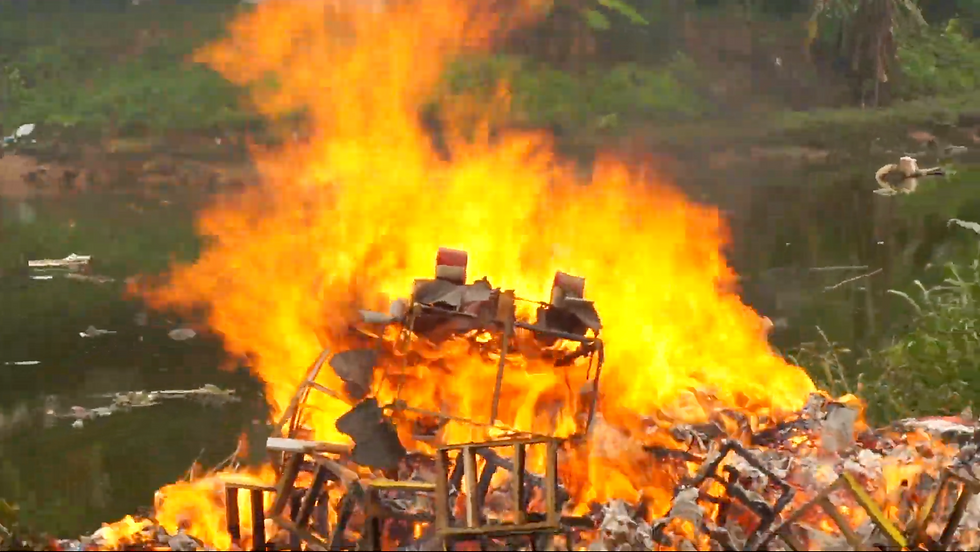
In a Hanoi temple courtyard, flames danced as joss paper turned to ash. Prayers were whispered, eyes were solemn - creating a quiet moment suspended between two worlds. One side: the living, yearning to connect. The other: the unseen realm, where hopes are sent through fire.
The ceremony felt timeless. Paper figures flared, vivid then gone - like memories burning bright before fading. A man murmured, "Not sure anyone receives it, but we do it for peace." That sentiment echoes across generations: people burn not for certainty, but for comfort, for the unseen embrace of tradition.
Yet peace comes with a price. The ashes rise, but so do concerns - about pollution, sustainability, and the toll of rituals in a changing world.
As the final embers dimmed, one question lingered: What do the ashes carry? Love, longing, memory - or an invisible burden passed to the future? Cinematically, the journey ends here, but the conversation - between beauty and consequence - continues.
The Voice of Youth - New Views on Ancient Beliefs
To conclude the journey, the views of the youth were sought - those who neither craft nor often burn joss paper, but who possess the power to shape its future.
Two university students shared their perspectives. One said, "I burn it on important days, like my grandparents' death anniversaries, because that’s how my parents raised me." The other was more direct: "I don’t. We light incense instead."

When asked about tradition, both agreed it should be moderated - enough to honor culture but adapt to modern life and the environment. "In the past, people used paper. Today, we remember in other ways - like letters or acts of kindness," one said.

Yet, when asked if they understood the meaning of joss paper, one admitted, "Probably not. Many just follow what elders do."
For tradition to live, it requires more than fire - it needs understanding.
A Sheet of Paper, a Journey, a Question
A joss paper sheet burns in minutes, but its making reflects generations of memory, faith, and craftsmanship. From village hands to city streets, it carries not just tradition, but modern questions about belief, economy, and sustainability. Vendors balance livelihood and detachment; youth weigh rituals against change. As it turns to ash in twilight, one question lingers: How can the sacred endure without becoming a burden - and how do we let go, without losing what matters?
Phúc Am Village, located in Hanoi’s Thuong Tin District, is one of northern Vietnam’s oldest and most renowned joss paper craft villages. For centuries, artisans here have handmade spiritual offerings - clothing, horses, cars, houses - for ancestor worship, using bamboo frames, paper, and paint with great precision. Yet today, this tradition faces growing scrutiny. The Ministry of Natural Resources and Environment reports that joss paper burning produces thousands of tons of waste and toxic emissions annually, raising concerns about pollution and public health. Once a sacred custom, joss paper has become a point of tension between cultural preservation and environmental responsibility. |
In your opinion, the tradition of burning joss paper should be:
0%Maintained as it is
0%Reduced and replaced with alternative practices
0%Completely eliminated
0%A personal choice, with no external interference


Comments